
The maximum temperature at the Safdarjung Observatory, Delhi's base station, rose to 42.5 degrees Celsius.

Hailstorms were reported at various parts of the national capital including Palam, Chilpighat and Ayanagar, the IMD said.

The event, for which people had started gathering since morning, began around 11.30 am and went on till around 1 pm. That day, the nearest weather station to the spot of the programme recorded a maximum temperature of 38 degrees Celsius.

The mercury breached the 46-degree Celsius mark in several places such as Allahabad (46.8 degrees Celsius) and Jhansi (46.2 degrees Celsius) in Uttar Pradesh; Sports Complex (46.4 degrees Celsius) in Delhi; Ganganagar (46.4 degrees Celsius) in Rajasthan; Nowgong (46.2 degrees Celsius) in Madhya Pradesh; and Maharashtra's Chandrapur (46.4 degrees Celsius).

According to a tweet by the weather expert, the icy, severe chill would be experienced between January 14 and 19 and is likely to be at its peak from January 16 to 18.

The eastern and northern parts of Delhi witnessed rain and hailstorm, IMD said.

While at some places people who had turned up at polling booths early in the morning left without casting their vote after waiting in line for a long time, Sena-UBT chief Uddhav Thackeray alleged that the process was slowed down deliberately.

On Tuesday, temperatures in Delhi hovered around the 43 degree Celsius mark.

The weather department attributed the unusual heat to the lack of rainfall due to the absence of active western disturbances over north India and any major system over south India.

Wearing white and lighter colours will prevent heat retention, thus reducing the risk of heat exhaustion, suggests Dr Karthiyayini Mahadevan.

Heatwave conditions continued unabated as temperatures hovered in the range of 40 to 44 degrees Celsius over most parts of the country on Tuesday, April 18, with Hamirpur and Prayagraj in Uttar Pradesh sizzling at 44.2 degrees Celsius.
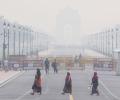
The capital witnessed a clear morning on Friday with the minimum temperature settling a notch below normal at 14.6 degrees Celsius.

After churning across the Arabian Sea for more than 10 days, Biparjoy made landfall near Jakhau Port in Gujarat on Thursday.

Delhi recorded its second hottest April this year since 1951 with a monthly average maximum temperature of 40.2 degrees Celsius.

Ukrainian's powerful forehand eventually overcame the 19-year-old Czech, who was the youngest player left in the women's draw.

The mercury at the Safdarjung Observatory is expected to breach the 43-degree mark on Thursday and touch 44 degrees Celsius by Friday, according to the India meteorological department.

'The Weather Channel argues that India faces the gravest challenge: Climate change-induced health vulnerability.' 'This is an issue often neglected, alerts Claude Arpi: "Prolonged summers, unpredictable rains, floods, droughts, and rising sea levels are the harsh realities of climate change in the country. These factors increase the frequency and severity of illnesses, pushing people into poverty, and forcing migration".'

According to an IMD forecast issued on Thursday, a heatwave spell will persist over northwest and central India during the next five days and over east India during the next three days.

In Delhi, Safdarjung, the base station for the national capital, recorded 44.2 degrees Celsius, while Mungeshpur observatory in northwest Delhi, reported 47.3 degrees Celsius.
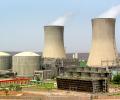
'Chinese are going bang, bang, bang building 30-35 reactors.' 'We should announce a programme of 50 new reactors and show that we mean business on the ground and not just announcements.'

Above-normal heatwave days are predicted in most parts of central, east and northwest India during this period.

The India Meteorological Department (IMD) predicted that cold wave to severe cold wave conditions are very likely to continue in northwest India over the next three days and abate thereafter.
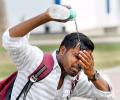
Heatwaves claimed more than 17,000 lives in 50 years in India, according to a paper authored by M Rajeevan, former secretary of Ministry of Earth Sciences, along with scientists Kamaljit Ray, S S Ray, R K Giri and A P Dimri.

The five warmest years in Indian weather history have occurred in the past 14 years -- the others being 2009, 2017 and 2010, in order of intensity.

Apart from the human body, human food will bear direct repercussions. From staples such as wheat, to coffee, dairy, and even the great Hilsa face the threat of reduced supply due to the extreme heat.

Delayed by 10 days due to cyclone Biparjoy, southwest monsoon is likely to progress further and hit Mumbai between June 23 and 25, the India meteorological department said on Wednesday.

Separately, the hunger strike by climate activist Sonam Wangchuk in Leh to "remind" the Bharatiya Janata Party-led Centre of its promise to safeguard the Union Territory's fragile ecology and unique indigenous tribal culture entered its 15th day.

Some India states are likely to record a significantly higher number of heatwave days, according to the national weather body.

Who do you think should be part of India's playing for the fifth Test against England?

The country also reported 1,750 deaths due to extreme weather events such as floods, cyclonic storms, heavy rain, landslides, lightning, among others, during the year, it said.
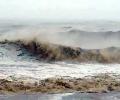
It said the weather system was expected to intensify into a deep depression by 5.30 am on Wednesday and turn into Cyclone Mocha in the next 12 hours, packing wind speeds of 80-90 kmph and gusting to 100 kmph.

The sprint race later on Saturday, as well as Sunday's main race, has been shortened due to the conditions at the circuit on the outskirts of New Delhi, organisers said.

A fresh spell of heatwave is likely to begin over northwest India from May 7 and over central India from May 8, the India meteorological department said on Thursday.

People stood at their places with their phone cameras open but faced trouble capturing aircraft formations due to the layer of fog and smoke cloaking the capital.
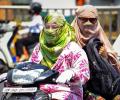
Gurugram in Haryana witnessed a scalding 48.1 degrees Celsius, the highest since May 10, 1966, when the city logged 49 degrees Celsius.

The rains were being caused due to a cyclonic circulation lying over north east Arabian sea and adjoining Saurashtra and Kutch regions, the IMD said in its bulletin.

In Rajasthan, 13 deaths related to rain and storm were reported over the last two days while at least 12 people were killed due to lightning strikes in Jharkhand during the same period, officials said.

The India meteorological department has issued a yellow alert, warning of a fresh heatwave spell in Delhi which may see temperatures soaring to 44 degrees Celsius by Wednesday.

The city recorded a minimum temperature of 14.6 degrees Celsius, a notch above normal, according to the India Meteorological Department.

'What we are seeing is some bursts of a cold wave.' 'It comes, troubles you for three-four-five-days and thereafter relaxes for another few days.' 'And then another fresh one (cold wave) comes.'
